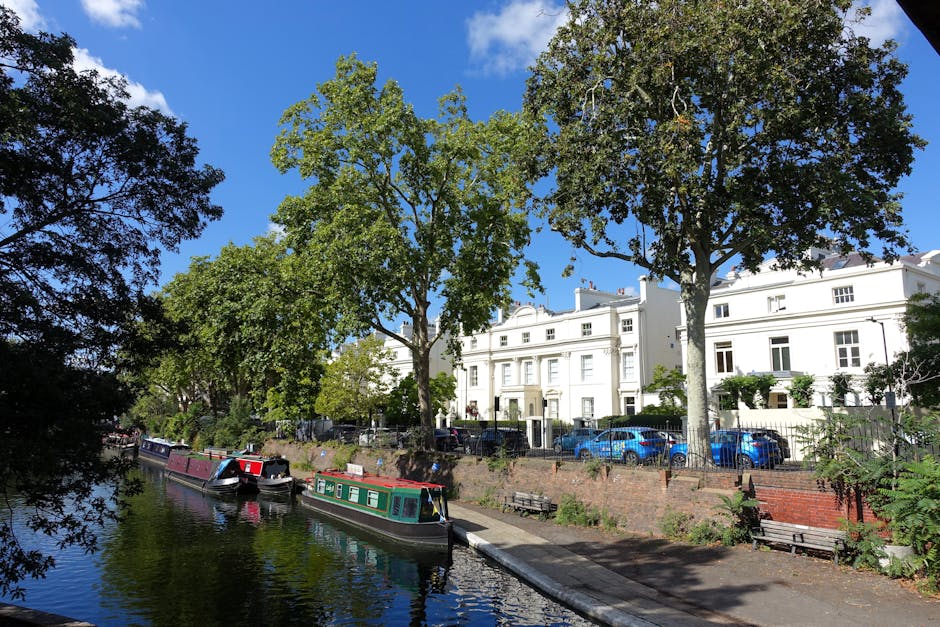
Little Venice Moves: Canalside Access Solutions
Moving in Little Venice sounds idyllic until you meet the practical reality of narrow streets, waterside paths, bridge approaches, awkward parking, and buildings that seem designed to test a mover's patience. That is exactly why Little Venice Moves: Canalside Access Solutions deserve a proper plan, not a last-minute scramble. Whether you are relocating a flat near the canals, shifting furniture to a house off Warwick Avenue, or organising a careful delivery to a waterside property, the access strategy matters almost as much as the van itself.
This guide breaks down how canalside access works, what makes Little Venice different, which solutions actually help on moving day, and how to avoid the usual headaches. It is designed for residents, landlords, movers, and anyone who needs to get items in or out with less stress and fewer surprises.
Table of Contents
- Why Little Venice Moves: Canalside Access Solutions Matters
- How Little Venice Moves: Canalside Access Solutions Works
- Key Benefits and Practical Advantages
- Who This Is For and When It Makes Sense
- Step-by-Step Guidance
- Expert Tips for Better Results
- Common Mistakes to Avoid
- Tools, Resources and Recommendations
- Law, Compliance, Standards, or Best Practice
- Options, Methods, or Comparison Table
- Case Study or Real-World Example
- Practical Checklist
- Conclusion
- Frequently Asked Questions
Why Little Venice Moves: Canalside Access Solutions Matters
Little Venice is one of London's most attractive areas, but attractive does not always mean easy to move through with a van full of furniture. Canalside streets often bring a mix of limited stopping space, pedestrian activity, shared access points, bridge pinch-points, and buildings with stairs, courtyards, or tight entrance halls. If you have ever tried to carry a sofa past a parked car while avoiding a cyclist, you will understand the problem immediately.
Access planning matters because a move fails at the margins. The boxy stuff is rarely the issue; it is the final 20 metres. Where does the van wait? Can it park legally and safely? Is there enough room to unload without blocking traffic or causing avoidable delays? Will the lift hold the weight, or do you need stair assistance and more hands?
Good canalside access solutions reduce disruption, protect belongings, and keep the day moving. They also help you avoid unnecessary costs caused by waiting time, repeated trips, damaged items, or rushed decisions. If your property sits near the water or on one of Little Venice's tighter roads, the move should be planned around the site, not forced through it.
For many people, the simplest next step is to review broader service options first, then narrow down the moving method that fits the building and street layout. A quick look at the full range of removal services available in Paddington can help you match the move to the access conditions before you commit to a schedule.
How Little Venice Moves: Canalside Access Solutions Works
Canalside access solutions are not a single product or trick. They are a set of practical choices that make loading and unloading possible in a constrained environment. In Little Venice, that usually means combining route planning, parking strategy, equipment selection, and timing.
The process typically starts with a basic assessment: property type, street width, parking restrictions, doorway size, stair access, lift availability, and the volume of items being moved. Once those details are clear, the mover can decide whether a standard van will work, whether a smaller vehicle is better, or whether the job needs a more flexible hand-carry approach from the roadside to the property.
In some cases, a move is easiest when items are prepared in advance and handed over at the kerb. In others, a carefully timed delivery window is more useful than size alone. That is why services such as pack, label, and wait for collection support can be surprisingly effective for homes with awkward access.
Timing also plays a major role. Little Venice can feel calm early in the day and more congested later on, especially where parking turnover is high or roads are shared with visitors and residents. Choosing the best time slot can make the difference between a smooth handover and a frustrating series of short delays. If you need flexibility, scheduled delivery at a convenient time is often more practical than forcing everything into a rigid slot.
For heavier or more delicate items, the access plan may involve specialist handling, extra protection, and a smaller team working in stages. That is common when moving pianos, fragile furniture, or bulky pieces through older properties and narrow entrances. The point is not to make the job complicated; it is to make it controlled.
Key Benefits and Practical Advantages
The best canalside access plan saves time, but that is only one part of the story. It also improves safety, reduces wear on the property, and makes the whole experience feel less chaotic. In busy residential pockets like Little Venice, those benefits matter more than people often expect.
- Faster loading and unloading: Less time spent hunting for space or repeatedly moving the vehicle.
- Lower risk of damage: Fewer tight corners, fewer rushed lifts, and more control over fragile items.
- Better protection for the building: Shared hallways, stair rails, and door frames are less likely to take a knock.
- Less stress on moving day: A clear access plan removes guesswork.
- Safer movement around the canal and road network: Particularly useful where pedestrians, cyclists, and parked vehicles all compete for space.
- More realistic scheduling: You can set expectations properly instead of hoping traffic will be kind.
There is also a subtle financial benefit. If access is planned properly, you are less likely to pay for unnecessary waiting, repeat journeys, or emergency workarounds. That matters whether you are organising a small flat move or coordinating multiple rooms of furniture. For an idea of how service scope can vary, it helps to compare man and van support with more comprehensive removal services in Paddington.
Expert summary: the best canalside move is rarely the one with the biggest van. It is the one with the cleanest route, the clearest timing, and the least amount of friction between vehicle, building, and street.
Who This Is For and When It Makes Sense
Canalside access solutions are useful for far more than full household removals. They are relevant any time the property layout or street environment makes standard loading awkward.
This approach makes sense for:
- residents of waterside flats and apartments
- households moving into or out of period properties with tighter entrances
- students and renters with limited furniture but limited access
- office teams relocating small premises near the canal network
- people receiving large furniture deliveries
- owners moving valuable or unusually shaped items, including instruments
If your move is straightforward on paper but awkward on the ground, this is usually the sort of help you need. A one-bedroom flat with no lift can be more demanding than a larger property with clear loading access. The building, not the postcode, decides the difficulty.
It is especially relevant if you are moving in a hurry, working around a short tenancy gap, or coordinating with a buyer, seller, landlord, or concierge. In those situations, a good access plan is not a luxury. It is the part that keeps the schedule from unravelling.
For moves involving compact flats, especially in nearby busy streets, related advice on flat removals in Paddington and packing guidance for basin-area residents can also be useful.
Step-by-Step Guidance
Here is the clearest way to approach a Little Venice canalside move without turning it into a logistical puzzle.
- Assess the access properly. Look at the street, parking, entrance, stairs, lift, and any restrictions around the property. Do not rely on memory alone. A short walk-through often reveals the real pinch points.
- Measure the awkward items. Sofas, wardrobes, mattresses, glass tables, and pianos can become awkward quickly if the doorway or turning space is tight.
- Decide on the vehicle size. In some Little Venice locations, a smaller van is easier to place and more practical than a larger one. Space efficiency often beats capacity.
- Plan the route and timing. Traffic patterns, school runs, visitor parking, and local congestion can all affect the day.
- Prepare the items for quick movement. Use proper wrapping, labels, and grouping so the team can work in a logical sequence.
- Protect the building and the contents. Floor coverings, corner protection, and padded handling reduce the chance of damage.
- Confirm the arrival and handover point. Clear communication prevents confusion over where the van should wait and which entrance to use.
- Leave room for the unexpected. A parked car, delivery truck, or temporary road restriction can change the plan, so build in a little flexibility.
If you are managing the move yourself, the simplest rule is this: the smoother the access, the less effort every other part of the job needs. A well-planned handover can save a lot of lifting, and your back will probably thank you later.
Expert Tips for Better Results
Small improvements make a big difference in canalside areas. These are the things that tend to separate a tolerable move from a genuinely efficient one.
- Use layered packing. Heavier items at the bottom, fragile items protected separately, and boxes labelled by room. It sounds basic because it is basic, but basics win on moving day.
- Keep the access route clear before the van arrives. Hallways, shared lobbies, and external paths should be free of loose clutter.
- Choose quiet times where possible. Less traffic usually means fewer interruptions and easier kerbside positioning.
- Check loading permissions in advance. Even where formal permits are not needed, local parking restrictions can still affect the plan.
- Separate essentials from the main load. Documents, chargers, medication, keys, and valuables should travel with you, not in the back of the van.
- Protect high-risk items twice. One layer of wrapping is good; two is often better for corners, mirrors, and polished surfaces.
For larger moves, it is often worth pairing the access plan with a storage strategy. That gives you flexibility if completion times slip or if you need to stage the move in phases. See storage options in Paddington if you need breathing room between properties.
And if the move includes bulky or specialist items, it is worth considering dedicated handling rather than trying to treat everything the same. For example, piano removals require a different level of planning from standard furniture transport.
Common Mistakes to Avoid
Most canalside access problems are predictable. That is the good news. The bad news is that people keep repeating them.
- Underestimating the walking distance. Five extra metres across uneven pavement may not sound like much, but it adds up quickly with multiple items.
- Assuming a large van is always better. Bigger vehicles can be harder to position near restricted streets.
- Forgetting about building protection. A rushed move can leave scuffs on walls, doorframes, or floors.
- Not checking delivery timing. A slot that looks efficient on paper may clash with local access patterns.
- Leaving packing until the morning of the move. That is how useful momentum disappears.
- Ignoring weather and surfaces. Wet paving, narrow walkways, and slippery thresholds can make loading slower and less safe.
Another common problem is trying to solve access issues at the curb rather than before the move. Once the van is parked and the team is ready, there is not much appetite for improvisation. Truth be told, nobody enjoys discovering that the "easy" entrance is actually a service door that opens the wrong way.
Tools, Resources and Recommendations
Useful tools do not need to be complicated. In Little Venice, the best moving aids are often the simplest ones used well.
- Furniture blankets and padding: Essential for corners, polished surfaces, and long carries.
- Strong tape and labels: Helps keep the packing clear and the unloading efficient.
- Protective floor coverings: Particularly important in communal buildings and older properties.
- Furniture straps and trolleys: Useful for safe handling, especially where items need to be moved in stages.
- Room-by-room inventory: A simple list prevents missing boxes and makes unloading easier.
- Access notes for the mover: Include entrance codes, bell names, parking details, and any known restrictions.
For readers who want a broader sense of what professional support can include, a man with a van service can be ideal for smaller or more flexible jobs, while house removals are usually the better fit for larger family moves. If you are comparing speed and flexibility, same-day removals in Paddington may also be relevant when the timetable is tight.
When you want to compare cost structures or plan around your budget, it is sensible to request details early. A clear quote is not just about price; it helps you understand what level of access support is included. You can start with pricing and quote information and then decide what level of service is appropriate.
Law, Compliance, Standards, or Best Practice
Moving around Little Venice does not usually involve heavy regulation for the customer, but there are still practical rules and standards worth respecting. If a van stops where it should not, blocks access, or creates a hazard, the result can be delays or complaints. Local parking restrictions, building rules, and common-sense safety practices all matter.
Best practice usually includes:
- checking whether parking or loading is permitted at the property
- ensuring the route is safe for pedestrians and residents
- protecting communal areas and private interiors
- using suitable handling methods for heavy or fragile goods
- keeping communication clear with building managers, neighbours, or landlords where needed
It is also sensible to work with a provider that treats safety, insurance, and complaints handling seriously. That does not just build trust; it gives you a clearer path if something unexpected happens. For that reason, many people review insurance and safety information, along with the health and safety policy and terms and conditions before booking.
If you are comparing providers, it also helps to confirm how they handle payment and customer data. Small administrative details are not glamorous, but they matter. A secure and transparent process is usually a sign that the rest of the operation is equally well managed. You can check payment and security details and privacy information if you want that extra reassurance.
Options, Methods, or Comparison Table
Not every canalside move needs the same setup. Here is a practical comparison of common approaches.
| Option | Best for | Strengths | Limitations |
|---|---|---|---|
| Standard van with direct access | Properties with usable roadside loading | Fast, efficient, usually cost-effective | Not ideal where parking is limited or streets are tight |
| Smaller van and hand-carry transfer | Narrow roads, busy canalside locations, awkward entrances | More flexible positioning, easier curb access | May require more trips or more labour |
| Timed delivery or collection window | Buildings with controlled access or busy local streets | Better coordination, less waiting around | Needs clear communication and punctuality |
| Staged move with storage | Delayed completion, renovations, or space constraints | Reduces pressure and gives flexibility | Requires planning and extra coordination |
The best option is not the one that sounds most professional. It is the one that fits your building, your street, and your timetable. A cramped roadside is not the place for wishful thinking.
Case Study or Real-World Example
Consider a typical Little Venice scenario: a resident is moving from a third-floor flat near the canal to a nearby home with limited on-street parking. The flat has a narrow staircase, a valuable dining table, several fragile mirrors, and a few awkward boxes that were somehow heavier than anyone expected.
Rather than sending in a large vehicle and hoping for the best, the move is planned around access first. The mover arrives at a time that avoids peak local congestion. The client has already grouped the boxes by room and labelled the fragile items. A smaller van is used so it can position closer to the property. Padding and blankets are applied to the table and mirror frames. The route from flat to van is kept clear, and the load is completed in stages rather than forcing a single rush.
The result is straightforward: less waiting, fewer lift trips, lower risk of damage, and a calmer handover. Nothing dramatic, which is exactly the point. The best move often looks uneventful from the outside.
This is also where a local, flexible service tends to shine. For smaller jobs, man and a van support can be a good fit, while more complex properties may benefit from broader removals in Paddington. If you are moving within the wider area, a local team familiar with access quirks can save you from learning everything the hard way.
Practical Checklist
Use this checklist before moving day so the canalside access plan is not left to chance.
- Confirm the exact property entrance and postcode
- Check parking or loading restrictions near the property
- Measure large furniture and awkward items
- Ask about staircases, lifts, and turn angles
- Prepare labels for boxes and fragile items
- Set aside essentials you will carry separately
- Protect floors, corners, and door frames where needed
- Choose a suitable arrival time for traffic and access
- Share entry instructions, codes, or contact details
- Keep storage or backup plans in mind if timings change
If you need a final sense-check before committing, it is reasonable to ask for a quote based on the actual access conditions rather than a rough description. If you are ready to talk through the details, get in touch here and explain the street layout, item list, and timing needs clearly.
Conclusion
Little Venice moves are easiest when access is treated as a planning task, not an afterthought. The streets, buildings, and canalside environment create a unique set of constraints, but those constraints are manageable if you plan the route, pick the right vehicle, prepare the items properly, and allow for timing flexibility.
The practical goal is simple: reduce friction. When that happens, the move becomes safer, quicker, and less stressful for everyone involved. Whether you are relocating a compact flat, handling delicate furniture, or arranging a delivery to a waterside property, the right access solution usually pays for itself in time saved and headaches avoided.
Get a free quote today and see how much you can save.
Frequently Asked Questions
What does canalside access mean for a move in Little Venice?
It refers to the practical challenges of loading or unloading near canals, narrow roads, bridges, shared paths, and buildings that may have limited parking or awkward entrances. The idea is to plan the move around those conditions instead of treating them as an afterthought.
Is a smaller van better for Little Venice moves?
Often, yes. A smaller van can be easier to position on tighter streets and may create less disruption near residential properties. The right choice depends on how much you are moving and how much roadside space is available.
Do I need to prepare anything before the mover arrives?
Yes. Clear the access route, label your boxes, measure bulky items, and make sure any entry codes or parking details are ready. A little preparation usually saves a surprising amount of time later.
How can I avoid delays on moving day?
Choose a sensible time slot, share access information in advance, and keep the route clear. It also helps to have a backup plan if parking is occupied or if the building entrance is temporarily busy.
Are canalside moves more expensive?
They can be, depending on the access difficulty, time required, and handling needed. But careful planning often reduces extra cost by preventing delays, repeated trips, or rushed work. A proper quote is the best way to understand the likely price.
What if my flat has no lift?
That is common in older London properties, and it just means the mover needs to plan for stair access, manual carrying, and extra care with heavy items. It is manageable, but it should be mentioned early.
Can I use storage if my timings do not line up?
Yes. Storage can be a practical bridge between properties when completion dates, keys, or access windows do not align. It is especially useful if you need to move in stages.
What items need special handling?
Pianos, glass furniture, large mirrors, antiques, and unusually shaped pieces often need more protection and care. If you have anything delicate or heavy, say so early so the plan can be adjusted.
How do I know whether I need full removals or just a man and van service?
If the move is small and flexible, a simpler service may be enough. If you are moving a full household, need multiple handlers, or have access complications, a fuller removals service is usually more appropriate.
Should I tell the moving team about parking restrictions?
Absolutely. Parking details can affect arrival time, van size, and unloading strategy. The more accurate the information, the less likely you are to run into avoidable problems.
What should I check in a provider before booking?
Look at safety standards, insurance, terms, complaints handling, payment security, and whether the service matches your access needs. Trustworthy providers make this information easy to find and easy to understand.
Can same-day help work for canalside access jobs?
Sometimes. It depends on vehicle availability, the complexity of the access, and how much needs moving. If you are in a hurry, the best move is to explain the situation clearly and ask what can realistically be done.